How New Technologies Are Changing Depression Care in 2027
16 April 2026
Remember when managing depression often felt like navigating a vast, foggy ocean with only a dated map and a flickering lantern? You’d set sail for the distant shore of “feeling better,” but the currents were unpredictable, and you could feel terribly alone in the expanse. Fast forward to today, in 2027, and that journey is being transformed. The fog hasn’t lifted entirely—depression remains a complex and deeply personal challenge—but our maps are now dynamic, our lanterns are intelligent beacons, and we have a fleet of support sailing alongside us. This isn't science fiction; it's the new reality of mental health care, woven together by astonishing technological advances that are making support more personal, proactive, and accessible than we ever dreamed possible.
Let's pull back the curtain on this quiet revolution and see how these tools are not replacing the human heart of therapy, but amplifying it, creating a new ecosystem of care that meets you where you are.

The Rise of the Digital Companion: AI That Listens and Understands
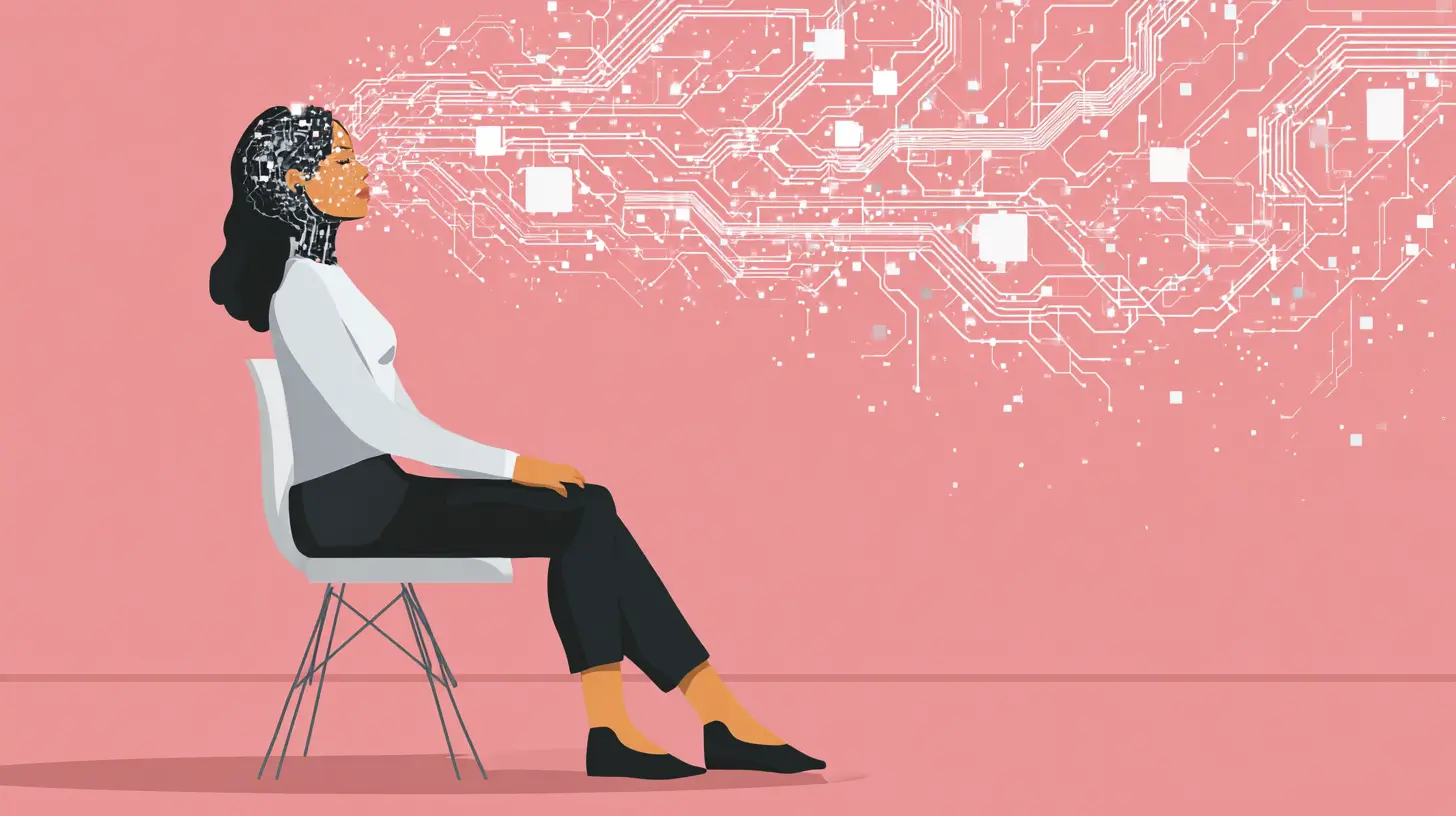
Gone are the days of static mood-tracking apps where you’d manually log a score and get a generic “Hang in there!” sticker. The AI of 2027 is a different beast altogether. Think of it less as an app and more as a compassionate digital companion that learns the unique rhythm of your inner world.These platforms use advanced natural language processing and affective computing. In simple terms? They can hear the sadness in your typed words before you even label it, and they can see the flatness in your voice during a weekly check-in call. They don’t just collect data; they discern patterns. They might notice that your sleep quality dips two days before your self-reported mood plummets, or that your social media usage becomes more passive and withdrawn during specific times of the month.
But here’s the crucial part: they don’t just bombard you with alarming graphs. They engage you in a conversation. “I notice your voice had less energy in our chat today, and you used more words associated with isolation. How are you really feeling about the work project deadline coming up?” This kind of interaction creates a moment of reflection, a gentle nudge toward self-awareness that can break the cycle of automatic negative thoughts. It’s like having a perceptive friend who’s always paying attention, not to judge, but to help you connect the dots you might be too overwhelmed to see.
Precision Psychiatry: Treatment Tailored to Your Biology
For decades, finding the right medication for depression has been, frankly, a bit of a guessing game. It involved trial and error, weeks of waiting for effects, and often, difficult side effects. This process itself could be disheartening. What if we could take the guesswork out?Welcome to the era of precision psychiatry. By 2027, genetic testing and advanced neuroimaging have become standard first steps in many treatment plans. A simple saliva test can now reveal how your specific liver enzymes are likely to metabolize different antidepressants. This means your psychiatrist can look at a report and say, “Based on your genetics, this SSRI is likely to be effective with minimal side effects for you, while this other common one would probably be processed too quickly to help.”
Beyond genetics, quantitative EEG (qEEG) and fMRI scans are used to identify specific brainwave patterns or neural connectivity issues associated with your depressive symptoms. Is your depression characterized more by overwhelming fatigue or by relentless rumination? The brain scan can show different “fingerprints.” This allows for interventions that are startlingly specific, like using transcranial magnetic stimulation (TMS) to target an underactive region of your prefrontal cortex with millimeter accuracy. It’s the difference between throwing a blanket over your head to block out the world and using a skilled mechanic’s tools to fine-tune the engine of your own mind.

Immersive Healing: VR and AR as Therapeutic Landscapes
What if you could practice confronting a stressful social situation from the safety of your therapist’s office? Or visit a calming, impossible-beautiful forest during a panic attack? Virtual Reality (VR) and Augmented Reality (AR) have moved beyond gaming and are now powerful therapeutic tools.In 2027, VR exposure therapy is a gold standard for treating the avoidance that often accompanies depression. Wearing a headset, you can gradually and controllably practice giving a presentation, navigating a crowded store, or even having a difficult conversation with a digital avatar. Your therapist is right beside you, coaching you through the anxiety in real-time, helping you build confidence muscle memory. You’re not just talking about doing it; you’re experiencing it in a safe space.
Meanwhile, AR acts as a layer of supportive augmentation over your real world. Through smart glasses or your phone, an AR app might highlight a peaceful park on your walk home, prompt you with a deep-breathing exercise when it detects rapid movement, or overlay calming visual patterns onto your ceiling as you try to sleep. It’s like having a therapist’s gentle suggestions painted directly onto the canvas of your daily life, helping to reshape your environment and your reactions to it.

The Constant Guardian: Wearables and Predictive Analytics
Your smartwatch in 2027 is so much more than a step counter. It’s a biometric guardian, a silent sentinel on your wrist. These devices now continuously and unobtrusively monitor a symphony of physiological data: heart rate variability (a key indicator of nervous system state), skin conductance (hinting at anxiety), sleep architecture, vocal tone, and even subtle patterns in your movement and gait.All this data feeds into predictive algorithms. The real magic isn’t in monitoring, but in anticipation. The system might send you and your care team a subtle alert: “Based on decreased heart rate variability and disrupted REM sleep over the past 48 hours, there’s a 75% probability of a significant low-mood episode in the next day. Recommend proactive behavioral activation.” This gives you agency. Instead of being blindsided by a wave of depression, you see it forming on the horizon. You can then use your toolkit—reach out to your therapist, engage with your digital companion, use a VR relaxation module, or take a prescribed walk—to potentially lessen its impact. It transforms care from reactive to proactive, empowering you to be the pilot of your well-being, not just a passenger.
The Human Connection, Amplified: Telehealth and Digital Community Hubs
Perhaps the most significant change is the demolition of barriers to human connection. The telehealth revolution begun in the early 2020s has matured into a seamless, integrated system. In 2027, you don’t just have video calls with your therapist. You might share real-time biometric data from your wearable with them in a secure portal, allowing them to see the physiological impact of a thought pattern you’re discussing. You might co-navigate a VR environment together. Therapy is dynamic, data-informed, and deeply integrated into your life.Furthermore, digital platforms have evolved into curated, therapeutic community hubs. These are not the wild-west comment sections of old. Using AI moderation and guided by mental health professionals, they connect individuals with similar experiences—say, postpartum depression or treatment-resistant depression—for peer support, group therapy sessions, and shared skill-building workshops. The feeling of “I am the only one going through this” is actively dissolved by technology-facilitated community. You find your fleet, your fellow sailors navigating similar waters, and the journey feels less lonely.
A Future of Hope, Wired with Compassion
So, is technology curing depression in 2027? No. The core human experience of pain, the need for meaning, and the healing power of empathy remain central. What these new technologies are doing is something perhaps more profound: they are building a scaffold of support around that human experience.They are providing clarity through precision, offering practice through immersion, granting foresight through prediction, and fostering connection through community. They are giving both patients and clinicians better tools, better maps, and better communication. The lantern is no longer flickering; it’s a steady, adaptive light that you can carry with you, illuminating paths forward that were once shrouded in darkness. The future of depression care is here, and it is not cold or robotic. It is intricately wired, deeply personalized, and ultimately, fiercely hopeful.
all images in this post were generated using AI tools
Category:
Depression AwarenessAuthor:

Matilda Whitley
Discussion
rate this article
2 comments
Raleigh McMahan
It's inspiring to see how technology is transforming depression care. Hope and healing are on the horizon.
May 5, 2026 at 2:46 PM
Matilda Whitley
Thank you! I'm glad you found it inspiring. The advancements in technology truly hold great promise for improving mental health care.
Soliel Lewis
By 2027, we'll be diagnosing depression with virtual reality goggles and mood-tracking smart fridges—because nothing says 'cheer up' like a snack delivery during therapy!
April 17, 2026 at 4:55 PM