The Planet Is Not Silent
May 23, 2026 - 05:37

For centuries, humans have sensed that the natural world is communicating in ways we barely grasp. Birdsong carries warnings. Tree roots share nutrients. Ocean currents whisper patterns of change. But we have lacked the tools to truly decode these signals. Now, artificial intelligence may be changing that.
Researchers are developing AI systems capable of analyzing vast streams of environmental data: the rustle of leaves, the shift in soil moisture, the frequency of insect wingbeats. These patterns, once invisible to human perception, are being translated into something we can understand. The goal is not just to observe nature, but to interpret its feedback in real time.
This technology could transform conservation. Imagine sensors in a forest that detect early signs of drought stress, or microphones in a coral reef that identify the first sounds of bleaching. AI can spot correlations that human eyes miss, potentially giving us a chance to act before ecosystems collapse.
But this power comes with a warning. The same tools that decode nature can also be used to exploit it. If we treat the natural world as a machine to be hacked, we risk losing the very mystery that makes it worth protecting. The challenge is not just to build better algorithms, but to approach this new understanding with humility. We are not mastering nature. We are finally learning to listen.
MORE NEWS

July 7, 2026 - 03:35
Psychology says people who are good with numbers and love mathematics aren't only analytical thinkers: WhaFor years, the stereotype of a math enthusiast has been a quiet, logical person who lives for spreadsheets and formulas. But psychology research is challenging that narrow view. New studies suggest...
July 6, 2026 - 02:41
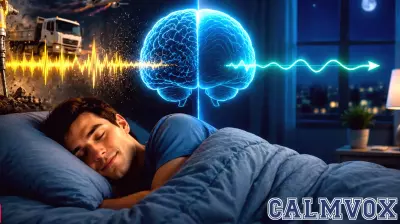
Psychology says people who can sleep through loud noises aren't necessarily heavy sleepers, they may simplMany people assume that if you can sleep through a loud party or a barking dog, you must be a heavy sleeper with excellent rest. Psychology and sleep research suggest this is not always the case....

July 5, 2026 - 04:59
Psychology says the real reason doctors' handwriting is often hard to read has nothing to do with lazinessFor decades, patients and pharmacists have struggled to decipher the scribbled notes and prescriptions left by physicians. The common assumption is that doctors simply do not care enough to write...

July 4, 2026 - 02:40
Good or bad? Here's what psychology really says about live-in relationshipsA generation ago, the idea of living together before marriage would have shocked many Indian families. Today, it is no longer unusual. In cities like Bengaluru, Mumbai, Delhi and Pune, more couples...