The Future of Brain-Computer Interfaces: What to Expect by 2026
22 April 2026
Let’s be honest for a second. The idea of plugging our brains into a computer sounds like the opening scene of a sci-fi thriller. We imagine neon-lit labs, cables snaking from skulls, and a lone hacker bending reality with a thought. But what if I told you that this future isn’t decades away? It’s knocking on our door, and by 2026, its hand is already on the knob.
Brain-Computer Interfaces, or BCIs, are shedding their speculative skin and becoming tangible tools. They’re moving from the realm of pure fantasy and niche medical trials into something that will, very soon, touch aspects of our daily lives. But what does that actually look like? Not the Hollywood version, but the real, messy, and profoundly human version. Let’s dive into the neural deep end and explore what we can genuinely expect by 2026.
Beyond the Hype: What a BCI Actually Is (And Isn't)
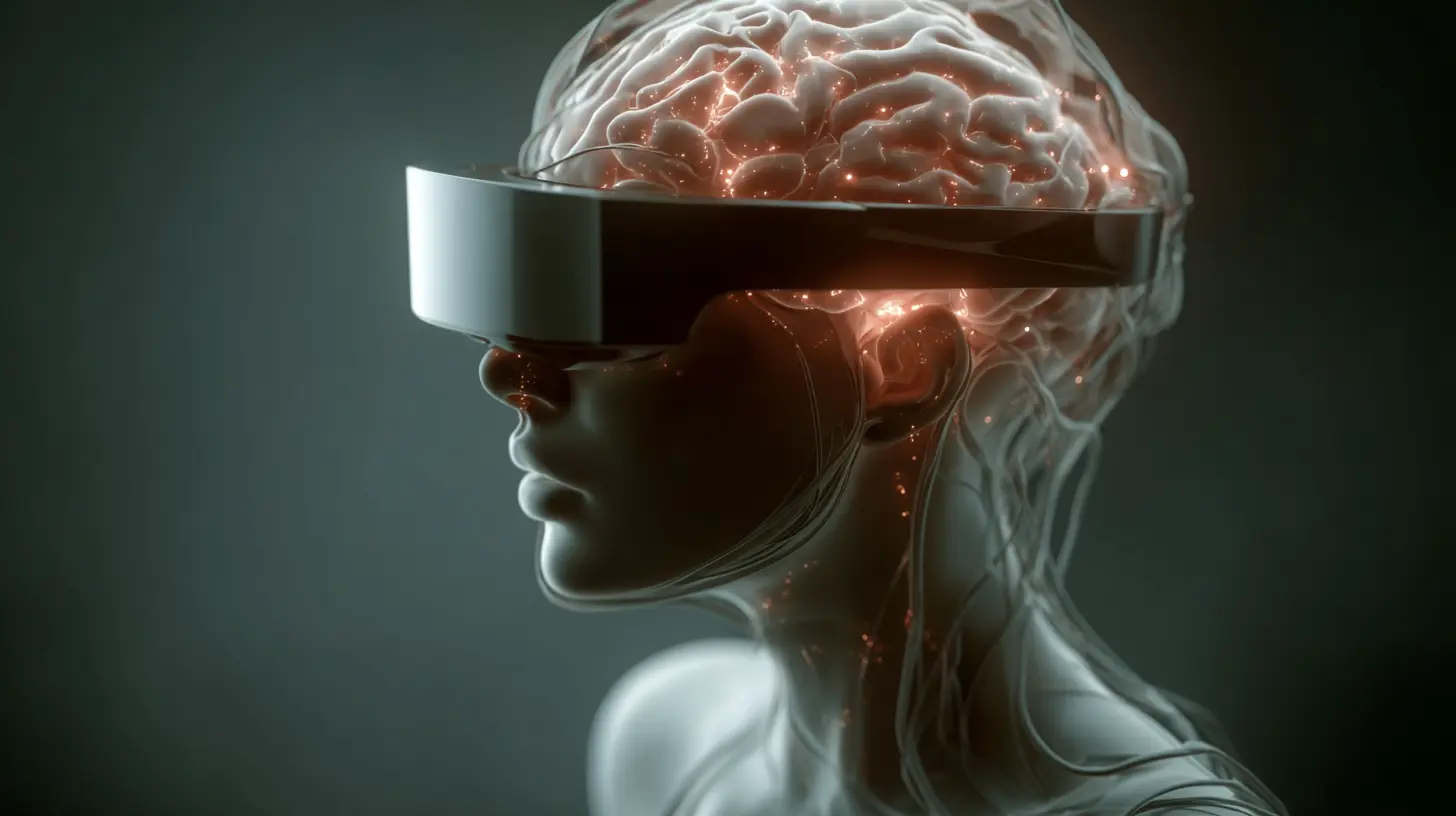
First, let’s clear the static. A BCI isn’t about reading your thoughts like a telepath. It’s not going to know you’re secretly craving pizza or replaying that awkward conversation from 2014. Think of it more like a sophisticated translator. Your brain speaks in crackles of electricity and chemical whispers—a language called neural activity. The BCI’s job is to sit at the border, listen to that neural chatter, and translate specific patterns into commands a digital device can understand.Right now, we have two main paths into this conversation: invasive and non-invasive. Invasive BCIs, like Neuralink’s famed “Link,” require surgery to place tiny electrodes directly onto or into the brain tissue. It’s a high-risk, high-reward scenario—incredibly precise signal quality, but, you know, brain surgery. Non-invasive BCIs are what you’ve probably seen: caps with electrodes that sit on the scalp, like advanced EEG machines. They’re safe and easy to use, but the signal is fuzzier, like trying to hear a symphony from outside the concert hall through a thick wall.
By 2026, the story won’t be about one winning over the other. It will be about these paths converging into a new, hybrid reality of practical application.
The Near-Term Horizon: 2026’s Realistic Landscape
So, what’s actually on the menu for the next couple of years? The flashy headlines promise mind-controlled video games and telepathic chat, but the real progress will be more grounded, and in many ways, more meaningful.1. Medical Miracles Become Clinical Routines
This is where BCIs will shine brightest by 2026. We’re moving beyond proof-of-concept and into broader therapeutic use.Restoring Movement and Sensation: For individuals with paralysis or spinal cord injuries, BCIs will move from lab demonstrations to more widely available systems. Imagine a person controlling a robotic arm to drink water independently, or using a thought-driven cursor to type and communicate. By 2026, these systems will become more seamless, more reliable, and crucially, begin to offer sensory feedback. It’s not just about sending commands out; it’s about closing the loop, letting the brain feel* the texture of a virtual object or the pressure of a robotic handshake. This isn't just function; it's about re-embodiment.
Combating Neurological Disorders: We’ll see significant strides in adaptive, closed-loop BCIs for conditions like epilepsy and Parkinson’s. Instead of a constant, one-size-fits-all electrical stimulation (like today’s deep brain stimulators), these next-gen BCIs will act like a neural thermostat. They’ll constantly monitor brain activity, detect the tell-tale storm of a seizure or the tremors of Parkinson’s before they happen*, and deliver a precise, preemptive pulse to calm the neural waves. It’s medicine that listens and responds in real-time.
2. The Consumer Edge: Not Mind-Reading, but State-Reading
The consumer BCI of 2026 won’t let you text your friend with a thought. But it might revolutionize how we understand ourselves.* The Rise of the "Neural Wearable": Think less sci-fi headset, more sophisticated fitness tracker for your mind. Sleek, headband-like devices will monitor metrics like focus, stress levels, and cognitive load. You’ll get real-time biofeedback: "Your neural focus is dipping, maybe take a five-minute break?" or "Your stress patterns are spiking, let’s guide you through a one-minute breathing exercise." It will be a tool for radical self-awareness, integrated into wellness and productivity apps.
* Gaming and Entertainment – A New Layer of Immersion: In gaming, BCIs won’t replace your controller; they’ll augment it. Game developers will use neural data as a rich new input stream. Your in-game environment could subtly change based on your anxiety level. A horror game that knows you’re not scared might ramp up the tension autonomously. Or, a meditation VR experience could visually calm as it detects your brainwaves slowing. It’s about dynamic, personalized experiences.
3. The Workplace Re-wired: Focus, Flow, and Ethics
This is where it gets thorny, and by 2026, the conversation will be unavoidable. Some forward-thinking (or perhaps intrusive) workplaces may pilot BCI wellness programs to optimize employee well-being and productivity. The promise? Helping workers achieve and maintain a state of "flow." The peril? A new frontier of surveillance and neuro-pressure. Could your "focus score" become part of a performance review? The ethical frameworks and regulations we start building now will define this reality.
The Tangled Web: Ethical, Social, and Psychological Quandaries
We can’t talk about this future without staring directly into its shadow. BCIs force us to ask questions we’ve never had to ask before.Privacy of the Inner Sanctum: Your search history can be deleted. Your neural data? It’s the raw, unfiltered story of you*. Who owns it? How is it stored and secured? A data breach of credit cards is one thing; a breach of your brainwave patterns is existential.
* Identity and Agency: If a BCI helps a depressed person regulate their mood, where does the device end and the person begin? If you use a cognitive enhancer to learn a language faster, is the achievement truly yours? We’ll grapple with new definitions of self and authenticity.
* The Neural Divide: This is perhaps the most pressing issue. Will BCIs become another tool that widens the gap between the haves and have-nots? If they offer clear cognitive, educational, or professional advantages, access becomes a justice issue. Do we risk creating a two-tiered society: the neuro-enhanced and the neuro-typical?
2026: A Bridge, Not a Destination
By 2026, we won’t be living in a "Brain-Computer Interface World." That’s still far off. Instead, 2026 will be the year the technology solidifies its place in our reality. It will be:* More Useful: Deeply integrated into therapeutic and assistive medicine.
* More Usable: Consumer devices will be smoother, more intuitive, and marketed for specific benefits.
* More Discussed: The ethical debates will move from academic journals to mainstream news and dinner table conversations.
The BCI of 2026 is less like a sudden revolution and more like the smartphone in 2008. It’s not yet ubiquitous, but its potential is undeniable. It’s clunky, expensive, and raises tough questions, but it’s clearly the prototype of something that will reshape our human experience.
We stand at the shore of a new inner ocean. By 2026, we won’t have sailed across it, but we’ll have built sturdier boats and drawn better maps. The journey into our own minds is beginning. The real question is, are we ready for what we might find there?
all images in this post were generated using AI tools
Category:
Brain And BehaviorAuthor:

Matilda Whitley
Discussion
rate this article
2 comments
Violet McGarvey
This article really opens up exciting possibilities for brain-computer interfaces! I can only imagine how these advancements might change our daily lives and mental health treatment. Looking forward to seeing what 2026 brings!
June 19, 2026 at 3:02 AM
Matilda Whitley
Thanks for your thoughts! The potential is truly exciting, and I can't wait to see how these innovations will impact our lives and mental health in the coming years.
Zoey Elliott
Embracing ethics will shape innovation.
April 27, 2026 at 3:23 PM
Matilda Whitley
Absolutely. Ethics will be crucial in guiding responsible innovation in brain-computer interfaces.