How Stress Impacts Workplace Productivity in 2026
17 April 2026
Let’s be honest for a second. When you hear “workplace stress,” you probably picture a frazzled colleague from a 2010s movie, drowning in paper, chugging coffee, and staring at a flickering computer screen. It’s a familiar trope, almost quaint. But as we stand firmly in 2026, the landscape of stress has undergone a silent, profound evolution. It’s sleeker, more integrated, and in many ways, more insidious. The connection between our mental strain and our output isn’t just about having a bad day anymore; it’s a complex, dynamic dance that’s reshaping the very architecture of productivity.
Think of the modern workplace not as an office, but as an ecosystem. A living, breathing network of humans, AI, constant data streams, and the lingering ghost of “always-on” culture. Now, imagine stress as an invasive species in that ecosystem. It doesn’t just attack one tree; it changes the soil chemistry, alters the rainfall patterns, and disrupts the food chain for every creature living there. That’s the scale of impact we’re dealing with now. So, how exactly is this new-age stress chipping away at our collective ability to do meaningful work in 2026? Let’s pull back the curtain.
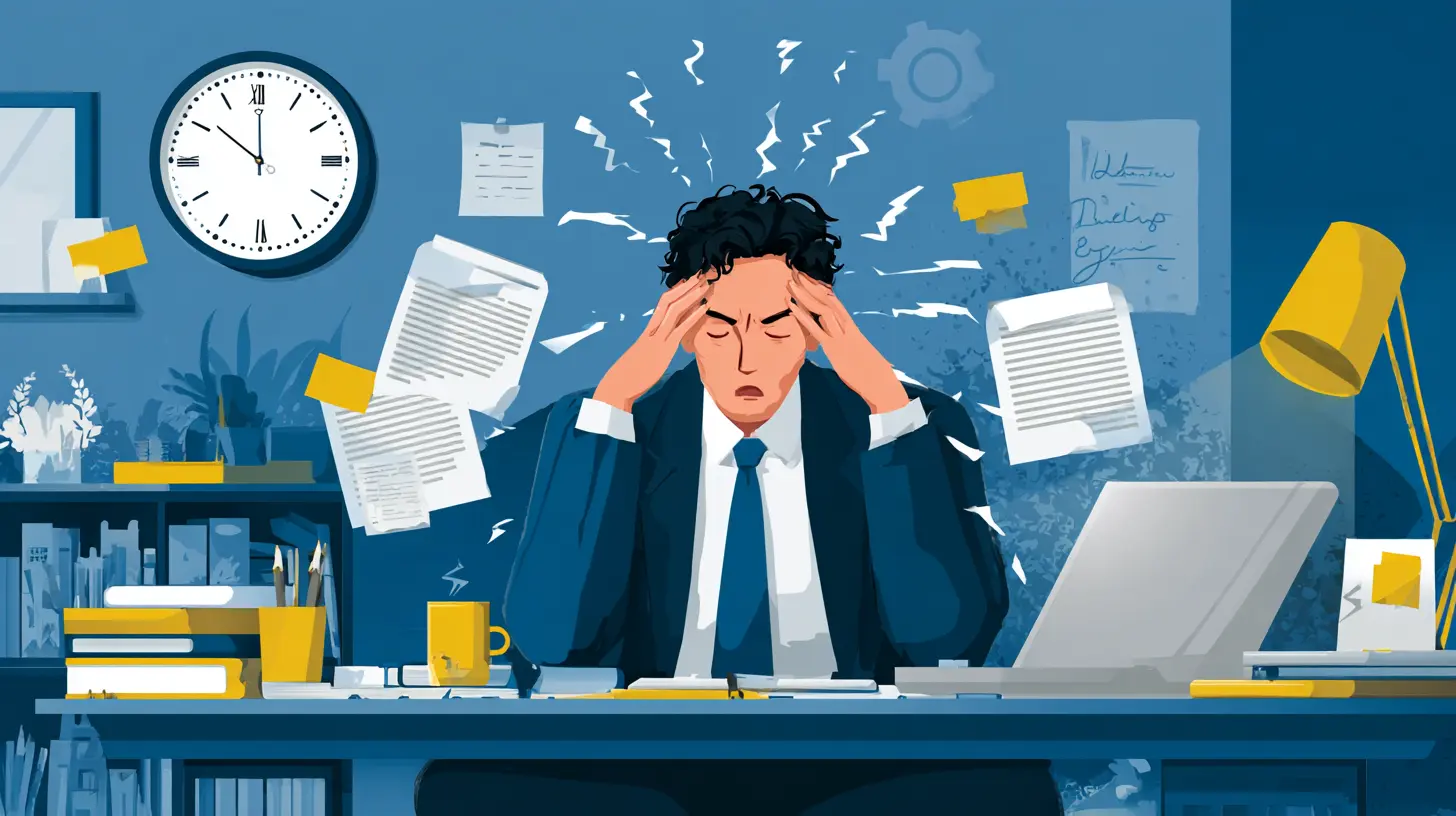
The New Faces of Stress: It’s Not Just Your Boss Anymore
Gone are the days when stress was primarily about a looming deadline or a demanding manager. Those are still players, sure, but they’ve been joined by a whole new cast of characters.Digital Ambiguity and AI Anxiety: We’re working alongside AI that can draft reports, analyze data, and manage schedules. Sounds great, right? But here’s the rub: it creates a thick fog of ambiguity. “Is my role still relevant?” “What truly human tasks are left for me?” This constant, low-grade existential doubt is a massive cognitive drain. Your brain spends precious energy on meta-worries about your place in the machine instead of on the creative problem-solving you were hired for. It’s like trying to paint a masterpiece while someone is quietly, constantly rearranging the furniture in your studio.
The Hyper-Transparency Trap: With project management tools, communication platforms, and digital dashboards, visibility is total. Your “active” status, your typing indicators, your task completion percentages—they’re all on display. This isn’t just oversight; it’s a performative panopticon. The stress comes from feeling you must appear productive every single second, which is utterly exhausting and completely counterproductive. Deep work requires periods of quiet thought that look, to a dashboard, like idleness. The pressure to perform for the algorithm kills the very productivity it’s meant to measure.
Cognitive Overload in the Data Ocean: We have more information at our fingertips than ever, but our brain’s processing capacity hasn’t gotten a 2026 upgrade. The stress of sifting, verifying, and synthesizing endless data streams leads to decision fatigue and analysis paralysis. When you’re mentally overwhelmed, the easiest path is to choose nothing, to procrastinate, or to make a safe, mediocre choice rather than a bold, innovative one. Productivity isn’t just about speed; it’s about direction and quality. Stress muddies the compass.
The Productivity Drain: Where Your Brain’s Energy Really Goes
So, these new stressors are buzzing around. What are they actually doing to our work output? The impacts are less about dramatic meltdowns and more about a slow, steady leakage of potential.The Myth of Multitasking & The Fragmented Mind: We wear our ability to “juggle” tasks as a badge of honor. But neuroscience is clear: the brain doesn’t multitask; it task-switches. And every switch comes with a cognitive cost. In 2026, with notifications pinging from a dozen apps, each switch is a micro-stressor. You’re not writing an email and listening to a meeting; you’re rapidly toggling between them, leaving little mental residue in either place. The result? Work that is shallow, error-prone, and devoid of depth. It’s productivity in terms of quantity of tasks touched, not quality of work completed.
Innovation’s Silent Killer: The Shrinking Mental Bandwidth: True innovation—the kind that solves big problems and drives companies forward—requires what psychologist call cognitive flexibility. It needs daydreaming, mental wandering, and the connection of disparate ideas. Chronic stress hijacks this system. It funnels all your mental resources toward the perceived “threat” (that angry email, that missed metric), leaving no spare capacity for blue-sky thinking. In a world that demands adaptation, a stressed workforce is literally incapable of its most important task: thinking differently.
The Collaboration Cool-Down: Modern work is collaborative. But stress makes us defensive, short-tempered, and poor listeners. It triggers a threat response in our social brain. When a teammate questions your idea, a stressed mind might see a challenge to your status, not a constructive critique. This erodes psychological safety—the belief that you can take risks without punishment. Teams without psychological safety stop sharing half-formed ideas, they stop asking “dumb” questions, and innovation stalls. The productivity of the group plummets because the stressed individuals within it are in self-protection mode.
The 2026 Response: Beyond the Perk-Based Quick Fix
We’ve identified the problem. The good news? The conversation in 2026 is finally moving past the superficial. It’s not just about free kombucha and ping-pong tables (though those are nice). The focus is shifting from managing stress to designing for resilience. It’s proactive, not reactive.Intentional Disconnection & "Right to Disconnect" Laws: More regions are formalizing what should be obvious: rest is not a reward for work; it’s a prerequisite for quality work. Legally-backed “right to disconnect” policies are becoming standard, helping to dismantle the always-on culture. Companies are encouraging digital sunset periods and modeling offline behavior from leadership. This isn’t anti-work; it’s pro-sustainable productivity. You can’t draw water from an empty well.
Productivity Metrics 2.0: Measuring Outcomes, Not Activity: Forward-thinking organizations are tearing down the hyper-transparency dashboards. The new metrics ask: “What was the impact of the work?” not “How many hours were logged?” This shifts the focus from visible busyness to meaningful results. It reduces the performative stress and gives employees autonomy—a powerful antidote to stress—to design their own paths to those results. This might mean a programmer’s most productive day looks like a long walk and two hours of deep, uninterrupted coding.
Human-AI Teaming, Not Replacement: The smartest workplaces of 2026 are explicitly defining the roles of humans and AI. The goal is to let AI handle the algorithmic, data-heavy lifting (the things that cause us cognitive overload), while clearly carving out and valuing intrinsically human skills: ethical judgment, creative ideation, empathy, and nuanced communication. This reduces AI anxiety by providing clarity and purpose. You’re not competing with the machine; you’re conducting it.
Embedded Mental Fitness, Not Just EAPs: Employee Assistance Programs (EAPs) are being supplemented—and sometimes replaced—by integrated mental fitness practices. This means mindfulness and resilience training are part of onboarding, not a stigmatized secret. It means managers are trained to have psychologically safe check-ins that focus on sustainable pacing. It’s building mental muscle as a core professional competency, right alongside spreadsheet skills or public speaking.
A Final, Personal Thought
Navigating workplace stress in 2026 is less about building a taller wall to keep it out and more about learning to sail on a rougher ocean. The waves of data, ambiguity, and connection are constant. The productivity of the future won’t belong to the person who can white-knuckle their way through the most hours. It will belong to the individual, and the organization, that understands the profound link between a nurtured, calm, and flexible mind and the ability to do work that truly matters.The most productive thing you can do for your career in 2026 might just be to step away, take a breath, and let your brain do what it does best when given space: make the connections that no algorithm can foresee. Our future at work depends not on fighting stress with more hustle, but on championing the quiet, human conditions that allow genius to flourish.
all images in this post were generated using AI tools
Category:
Stress And ProductivityAuthor:

Matilda Whitley
Discussion
rate this article
2 comments
Kassandra Mason
Understanding stress can boost productivity.
May 1, 2026 at 4:38 AM
Matilda Whitley
Absolutely, recognizing stress is key. It helps create strategies that lead to a healthier, more productive work environment.
Fenn Hamilton
Thank you for this insightful article! It's a crucial reminder of how stress can affect our work. Addressing mental well-being is essential for fostering a productive and healthy workplace environment.
April 17, 2026 at 4:55 PM
Matilda Whitley
You're welcome! I'm glad you found it helpful. Prioritizing mental well-being is key to enhancing productivity.