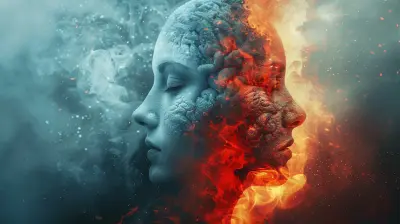
Confirmation Bias: Why We Only See What We Want to See
31 May 2026
Let’s face it — we all think we’re right. Most of the time, we believe our opinions are based on rock-solid facts and rational thinking. But what if I told you your brain is playing tricks on you — constantly? Welcome to the wild, sneaky world of confirmation bias, one of the most powerful cognitive distortions shaping how we see the world. Buckle up, because by the end of this, you might never trust your own thoughts the same way again.
What Is Confirmation Bias?
Confirmation bias is your brain’s way of saying, “I’m right, and I’ll find the evidence to prove it.”It’s the mental shortcut you take (often without realizing it) that leads you to search for, interpret, and remember information in a way that confirms what you already believe, while ignoring anything that contradicts it. Think of it like having blinders on — you see what you want, and conveniently skip what you don’t.
We all do it. Yes, even the most logical, data-driven, spreadsheet-loving individuals out there. It’s not a flaw in your personality — it’s just how the brain works.
Why Is It So Hard to See Things Objectively?
It's simple: our brains love stories that make us feel good. The truth? Not so much.Objectivity requires mental effort. It forces us to consider that we might be wrong — and let’s be honest, who enjoys being wrong? It kind of feels like tiny daggers to the ego. So, instead, we cherry-pick info that keeps us comfy and aligned with our existing worldview.
We cling to echo chambers, follow only like-minded voices, and suppress anything that challenges our beliefs. Why? Because cognitive dissonance — that uncomfortable feeling when facts poke holes in our opinions — sucks. Confirmation bias swoops in to save us from that discomfort (while quietly derailing rational thought).
Real-Life Examples of Confirmation Bias
Let’s bring this abstract idea down to Earth. Confirmation bias isn’t just a textbook term — it’s running rampant in your social feeds, your conversations, and even your Google searches.1. Politics (A Big One)
Ever noticed how people from opposite political sides can look at the same event and draw completely different conclusions? It's not because one side is blind — it's because both sides are applying confirmation bias like pros.You see what you already believe. The moment a politician you dislike makes a mistake, your brain shouts, “See! I knew it!” But when your favorite politician messes up? “Eh, it’s blown out of proportion.” Sound familiar?
2. Health and Nutrition
Keto is the best! Wait no, carbs are essential! Hold up, intermittent fasting is the holy grail!People often research diets with a specific belief in mind and find scientific studies to back them up — while conveniently skipping over the mountains of research that say otherwise. Your health beliefs are often more reflective of confirmation bias than pure science.
3. Relationships
Got a gut feeling that your partner isn’t trustworthy? Suddenly, every late reply or missed call becomes “evidence.” But if you think they’re perfect? Their red flags become “just quirks.” Now multiply this by every relationship you’ve ever had.
Where Does Confirmation Bias Come From?
At its core, confirmation bias is about survival.In ancient times, doubting your beliefs could have meant death. If you heard a rustle in the bushes and assumed it was a tiger, you ran. If you stopped to question that, well... you became lunch. Our brains evolved to make quick decisions and stick with them — even when faced with conflicting info.
Fast forward to today, and our brains are still playing that ancient survival game — but now it’s risking our mental clarity instead of our lives.
How Confirmation Bias Warps Our Reality
Let’s get a little deeper.When you think of your brain as a filter — not a mirror — it changes everything. You’re not reflecting reality; you’re filtering it through a lens shaded by your expectations, experiences, and yes, your biases.
This isn't a “maybe” situation. Studies in psychology have repeatedly shown that confirmation bias affects how we:
- Watch the news
- Process social issues
- Make financial decisions
- Judge others
- Remember the past
Yup — it even distorts our memories. Your brain is so committed to your beliefs that it may literally alter how you remember events to support your point of view. Wild, right?
The Internet: Confirmation Bias on Steroids
Algorithms love your confirmation bias. Social media platforms feed you content similar to what you already engage with. It's like a digital yes-man, always agreeing with you, never challenging you.Click one vegan recipe? Soon your feed will be full of pro-vegan, anti-meat content. Watch a conspiracy video? The algorithm piles on the similar ones. Suddenly, it feels like everyone agrees with you — because in your little online bubble, they do.
This echo chamber fuels polarization, miscommunication, and a warped sense of reality. It’s confirmation bias amplified to dangerous levels.
How Confirmation Bias Affects Mental Health
Believe it or not, your thought patterns play a massive role in your emotional well-being. When confirmation bias is left unchecked, it can seriously mess with your mental state.1. Anxiety and Paranoia
If you believe the world is unsafe, confirmation bias will highlight every crime story, every piece of bad news, and every stranger with a sketchy vibe — reinforcing your anxiety.2. Depression
Think you’re not good enough? Confirmation bias will make sure you “notice” when people ignore your texts, forget your accomplishments, or offer fake compliments. It lets the negative stick while the good stuff slides right off.3. Self-Sabotage
When you believe something won’t work out — whether it's a job interview or a new relationship — your brain hunts for proof that it’s doomed. Talk about being your own worst enemy.How To Fight Back Against Confirmation Bias
The first step? Admit you have a problem.No shame. We all do. The key is awareness. Once you know your brain is biased, you can begin to question your judgments and decisions more critically.
1. Seek Dissonance, Not Just Comfort
It sounds painful, but it’s powerful. Read opposing viewpoints. Follow voices that challenge your beliefs. Ask yourself, “What if I’m wrong?” The goal isn’t to change your mind every time — it’s to strengthen your thinking by testing it.2. Ask Better Questions
Instead of googling “Why is intermittent fasting the best diet,” try “What are the cons of intermittent fasting?” This forces your brain to consider the other side.3. Fact-Check Yourself
Before you share, argue, or take action — pause. Ask yourself: Am I engaging with info that confirms my beliefs just because it feels good? Or is this genuinely supported by evidence?4. Embrace Intellectual Humility
You’re not supposed to know everything. None of us are. The smartest people in the room are often the ones asking questions, not shouting answers. Let curiosity lead, not ego.Let’s Wrap This Up
Confirmation bias is like wearing tinted sunglasses — except you don’t know you’re wearing them. It creeps into your thoughts, choices, habits, and even relationships. It gives you a distorted version of reality that feels real — which is exactly what makes it so dangerous.But here’s the hopeful part: Awareness is power. Once you learn to spot the bias, you can slowly start peeling back those filters and seeing things more clearly. It won’t always be comfortable, and it sure as hell won’t be easy. But it will be real, and in a world drowning in half-truths and filtered feeds, that’s a superpower.
Final Thought
Confirmation bias isn’t a glitch. It’s a feature — just not always a helpful one. The next time you find yourself agreeing with something a little too easily, take a step back. Challenge it. Dig deeper. The truth might be inconvenient — but it’s worth it.Want to level up your thinking? Start by questioning why you believe what you believe. That’s where real growth begins.
all images in this post were generated using AI tools
Category:
Psychological BiasAuthor:

Matilda Whitley
Discussion
rate this article
1 comments
Sophia Webster
This article really highlights how our biases shape our perspective. It's a powerful reminder to question our assumptions and seek diverse viewpoints. Understanding this can lead to personal growth and better connections with others.
June 5, 2026 at 4:20 AM
Matilda Whitley
I appreciate your insights! Questioning our biases is crucial for growth and building meaningful connections. Thanks for engaging with the article.